
·
·
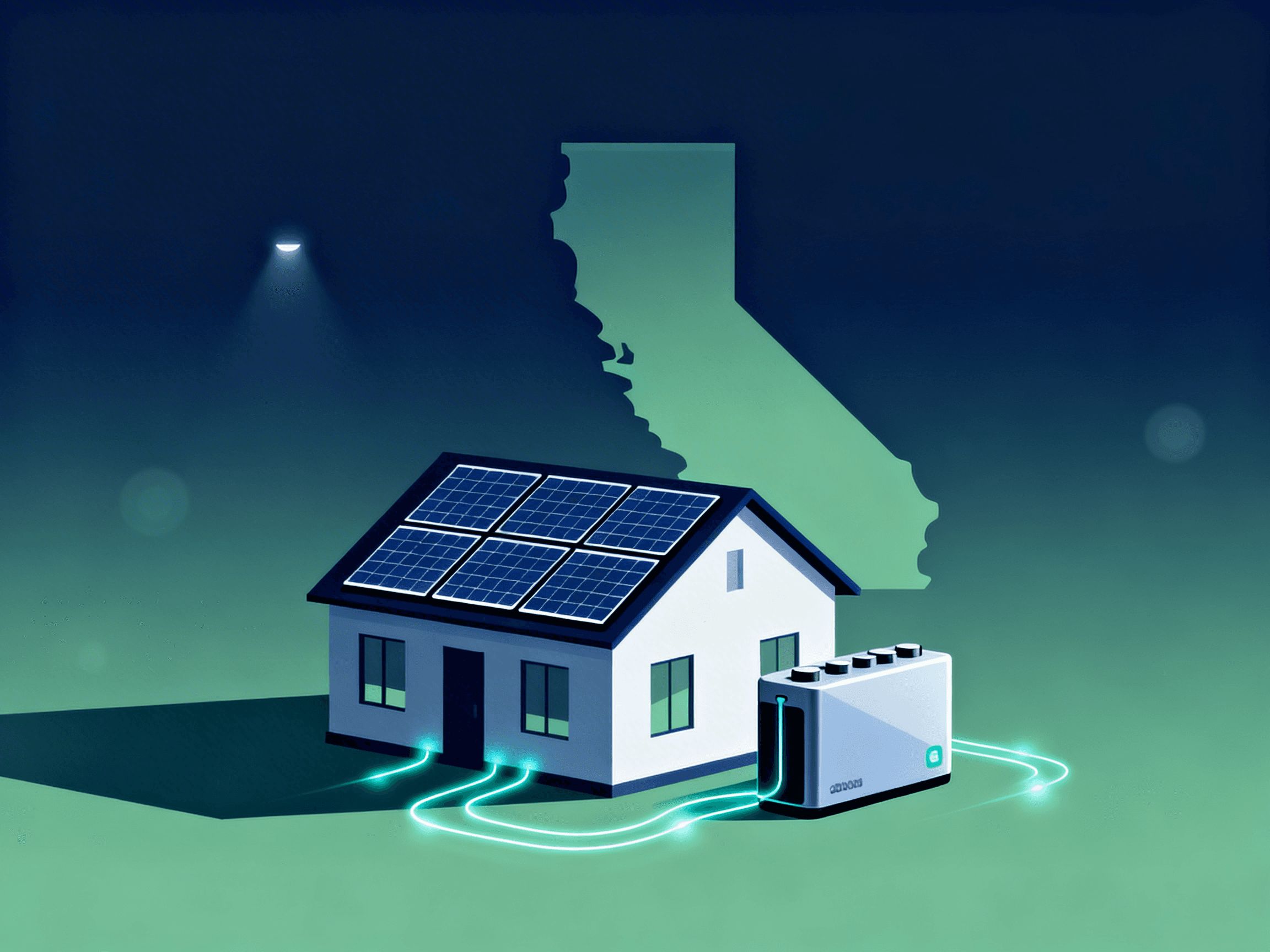
SGIP Rebate Levels
General Market — Available to all California utility customers regardless of income or location. The rebate is approximately $150 per kWh of storage capacity. For a typical 13.5 kWh home energy storage system, that's about $2,025 off the installation cost — roughly 15% of the total.
Equity Category — Available to households earning less than 80% of their county's area median income (AMI), or those living in disadvantaged communities as defined by CalEnviroScreen. The rebate jumps to $850 per kWh. For that same 13.5 kWh system, that's $11,475 — enough to cover most or all of the cost.
Equity Resilience Category — The highest incentive tier, available to qualifying households in areas at risk of wildfires or power shutoffs. The rebate reaches $1,000 per kWh, which for a 13.5 kWh system means $13,500 — often covering 100% of the installation cost.
Residential Equity and Storage (RSSE) — Launched in June 2025 with $280 million in funding, this newer budget offers some of the highest energy storage incentives in SGIP history for qualifying low-income households. Combined with federal tax credits, it can make a qualifying system free for those who are eligible.
Real Numbers for Real Homeowners
To put this in perspective: a typical home energy storage system costs between $10,000 and $15,000 installed. Under the Equity or Equity Resilience categories, your SGIP rebate alone can cover $11,000 to $13,500 of that cost. Add in the federal Investment Tax Credit (ITC), and many homeowners pay nothing out of pocket.
Even General Market customers benefit significantly when combining the SGIP rebate with the federal tax credit.
Who Qualifies for SGIP?
Eligibility depends on several factors. Here's a breakdown of each category:
General Market (Everyone)
If you're a residential customer of PG&E, SCE, SDG&E, or SoCalGas, you're eligible for the General Market rebate. No income or location requirements.
Equity Category
You may qualify for the higher Equity rebate if you meet one of these criteria:
Income-based: Your total household income is below 80% of your county's area median income
Location-based: You live in a community designated as "disadvantaged" by CalEnviroScreen (the state's environmental health screening tool)
Housing-based: You live in deed-restricted affordable housing
Tribal lands: You live on federally recognized California tribal land
Equity Resilience Category
To qualify for the highest rebate tier, you must meet the Equity criteria above AND at least one of the following:
You've experienced two or more Public Safety Power Shutoffs (PSPS) at your address
You live in a Tier 2 or Tier 3 High Fire Threat District (HFTD)
You're enrolled in your utility's Medical Baseline Program
You've notified your utility of a serious illness or life-threatening medical condition
Important Sizing Rules
Residential systems can receive incentives for up to 30 kWh of storage capacity
Your system size can't exceed your home's peak electricity demand over the past 12 months
Systems installed up to 12 months before your application may still be eligible
Which Utility Companies Participate?
SGIP is administered by California's four major utility companies, each managing the program for their own service territory:
PG&E (Pacific Gas & Electric) — Northern and Central California
SCE (Southern California Edison) — Southern California, Inland Empire, parts of Central California
SDG&E (San Diego Gas & Electric) — San Diego region (administered by the Center for Sustainable Energy)
SoCalGas (Southern California Gas Company) — Southern California natural gas customers
Each utility manages its own SGIP budget independently, so funding availability can vary by region. A registered SGIP Developer will know the current funding status for your utility.
What Technologies Qualify?
SGIP covers several distributed energy technologies. The most common residential application is energy storage, either standalone or paired with on-site generation.
Qualifying technologies include:
Advanced energy storage systems (home lithium-ion storage systems)
On-site generation paired with energy storage
Wind turbines
Fuel cells
Microturbines
Waste heat to power technologies
For most homeowners, the conversation centers on energy storage. These systems store energy (from on-site generation, or from the grid during off-peak hours) and release it when you need it — during peak rate hours, at night, or during a power outage.
Why Energy Storage Matters in California
California faces unique energy challenges that make home energy storage more than just a nice-to-have. It's becoming essential for many households.
Power Shutoffs Are a Reality
PG&E and other utilities have implemented Public Safety Power Shutoffs (PSPS) during high fire-risk conditions. During a PSPS, the utility proactively cuts power to prevent wildfires — sometimes for days. Without stored energy, your home goes dark. With an energy storage system, your essential systems (refrigerator, lights, medical equipment, Wi-Fi) keep running.
Time-of-Use Rates Reward Smart Energy Use
California utilities have shifted to Time-of-Use (TOU) rate structures where electricity costs significantly more during peak evening hours (typically 4pm–9pm). Energy storage lets you store low-cost energy during the day and use it during expensive peak hours, saving you money on every bill.
Grid Reliability Is Declining
As California's grid faces increasing strain from population growth, EV adoption, and extreme heat events, having your own stored energy provides a buffer against brownouts and unexpected outages.
It's Good for California
Every home with an energy storage system reduces strain on the grid during peak demand, decreases the need for polluting "peaker" power plants, and moves California closer to its clean energy goals. SGIP makes this transition accessible to everyone, not just wealthy homeowners.
How to Get Started with SGIP
Ready to find out if you qualify? Here's what to do:
Get your eligibility assessed. An advisor can review your home, determine your likely eligibility category, and connect you with a registered SGIP Developer who handles the application. At California Energy Initiative, we help homeowners understand the SGIP program and connect them with the right partners — we are an advisory company, not an installer.
Gather your information. You'll need your utility account number, recent electricity bills (to determine system sizing), and income documentation if applying for Equity or Equity Resilience categories.
Don't wait. SGIP funding is allocated in budgets that can run out. Some utility budgets are already waitlisted. The sooner you apply, the better your chances of securing funding.
Frequently Asked Questions
Is SGIP funded by taxpayer money?
No. SGIP is funded through a small surcharge on utility bills, not through state or federal taxes. It's a ratepayer-funded program managed by the CPUC.
Do I need any other equipment to qualify?
SGIP is focused on energy storage. Storage can be installed on its own or paired with on-site generation. The right setup depends on your home and goals, which a registered developer can assess.
How long does the SGIP process take?
From application to installation, the process typically takes 2-4 months, depending on your utility and the complexity of your installation.
Do I have to pay the rebate back?
No. SGIP incentives are not loans — they're rebates. However, you do agree to keep the system operational for 10 years and complete at least 52 discharge cycles annually.
What happens if I move?
The 10-year permanency requirement is tied to the system, not you personally. If you sell your home, the new owner benefits from the system, which can also add to your home's value.
Can renters qualify for SGIP?
SGIP is typically available to property owners since it involves permanent installation. However, deed-restricted affordable housing properties may qualify under the Equity category, benefiting tenants.
Is SGIP available outside California?
No. SGIP is exclusively a California program. However, many other states offer their own energy storage incentive programs, and some are looking at California's model as they develop their own.
The Bottom Line
SGIP is one of the most generous clean energy incentive programs in the country. For qualifying California homeowners, it can make energy storage essentially free — protecting your home from power outages while permanently reducing your energy bills.
The program won't last forever. Budgets are finite, and some utility territories have already reached waitlist status. If you've been thinking about energy storage, now is the time to look into your eligibility.
California Energy Initiative helps homeowners across California understand and access the SGIP program. We assess your eligibility and connect you with registered SGIP Developers and independent licensed installers, so you can focus on what matters: saving money and keeping your home powered.
Check your eligibility or call us: (877) 743-1143.
Sources & Official Resources:
CPUC Self-Generation Incentive Program — cpuc.ca.gov
PG&E SGIP Page — pge.com
SCE SGIP Page — sce.com
SDG&E SGIP (Center for Sustainable Energy) — sgipsd.org
SGIP Handbook 2025 — cpuc.ca.gov
California Energy Initiative is a Sacramento-based local energy advisory company. We connect homeowners with state-supported self-generation programs and energy incentives. Call (888) 288-6988 or visit cainitiative.com.